Shaft Anodes for Boat Propeller Shafts
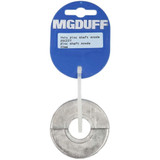
Help protect your boat's propeller shaft from galvanic corrosion with the right shaft anode for your installation. At Anode Outlet, our range includes zinc, aluminium and magnesium shaft anodes from manufacturers including Tecnoseal and MG Duff, with ball, heavy duty and shaft collar designs for different fitting requirements.
Whether you are replacing a worn propeller shaft anode on a sailing yacht or checking the stern gear on a motorboat, start with three things: the water your boat is kept in, the exact shaft diameter and the space available for the anode. Explore the ranges below to find a suitable replacement.
What Does a Shaft Anode Do?
A shaft anode is a replaceable sacrificial anode fitted directly around a boat's exposed underwater propeller shaft. It is made from an alloy selected to corrode in preference to the metal it protects. This process is called cathodic protection.
Galvanic corrosion can occur when different metals are electrically connected in water. A correctly selected and fitted shaft anode helps protect the shaft and electrically connected components, such as the propeller. Its effectiveness depends on the anode's material, size, position and electrical contact. It should form part of the boat's overall corrosion protection arrangements, rather than being assumed to protect every underwater fitting.
Which Metal Should I Choose for a Shaft Anode?
Choose the anode alloy to suit the water where your boat spends its time. Salt water, brackish water and fresh water have different electrical conductivity, so the same anode material is not suitable for every location. Brackish water is a mixture of salt and fresh water, commonly found in estuaries and some enclosed marinas.
General shaft anode material guide
| Anode material |
Usual water suitability |
| Zinc |
Salt water |
| Aluminium |
Salt water and brackish water |
| Magnesium |
Fresh water, subject to vessel suitability |
Always check the anode manufacturer's recommendations and your vessel's requirements. If you change moorings or move between water types for an extended period, review your anode selection. Avoid mixing different anode alloys on the same electrically connected protection system unless the manufacturer specifies that arrangement.
Aluminium Shaft Anodes
Aluminium shaft anodes are suitable for salt water and brackish water applications. They are particularly useful to consider for boats kept in estuaries, where salinity can vary. Marine aluminium anodes use a purpose-made sacrificial alloy; they are not simply pieces of ordinary aluminium.
Magnesium Shaft Anodes
Magnesium shaft anodes are generally used for boats kept in fresh water, including suitable river and lake installations. Magnesium provides the driving voltage needed in less conductive water. It is unsuitable for salt water, where it can be consumed too quickly and cause overprotection. MG Duff also advises against magnesium anodes on wooden-hulled boats.
Zinc Shaft Anodes
Zinc shaft anodes are a traditional choice for boats kept in salt water. They are not a suitable default for freshwater use, where an insulating surface layer can reduce their effectiveness. Match your replacement to both the water conditions and the shaft dimensions.
Ball, Collar or Heavy Duty Shaft Anode?
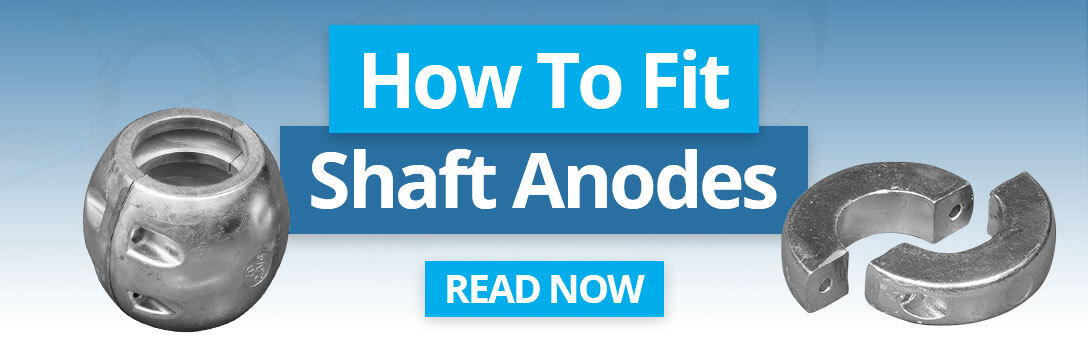
The shape of a shaft anode affects where it can be fitted. Ball shaft anodes have a rounded body around the shaft, while collar anodes provide a narrower option where the exposed length between the propeller and shaft bracket is limited. Always compare the actual dimensions: two anodes for the same shaft diameter can need different amounts of space.
Heavy duty designs may incorporate additional retaining features, such as an internal insert. Check the individual specification rather than assuming every heavy duty anode has the same construction or service life. A larger anode is only useful if its alloy, fit and capacity suit the installation.
How to Choose the Correct Shaft Anode Size
The size used to describe a shaft anode normally refers to the shaft diameter it fits, rather than the anode's outside diameter. Before ordering, check:
- Exact shaft diameter: measure a clean section of shaft with vernier callipers or another accurate measuring tool.
- Metric or imperial sizing: a 25mm shaft and a 1-inch shaft are different sizes. One inch equals 25.4mm, so these anodes should not be treated as interchangeable.
- Available fitting space: compare the anode's length and outside diameter with the clearance around the propeller, shaft bracket, bearing and any rope cutter.
- Anode capacity: the amount of metal to protect and the intended time afloat matter alongside the shaft diameter. A matching bore alone does not confirm sufficient protection.
- Product details: check the part number, technical drawing and fastening requirements against your existing installation.
Use an old anode's part number as a starting point, but confirm its suitability before buying the same replacement, particularly if the previous anode wore unusually quickly or the boat has moved to different waters.
Fitting a Replacement Propeller Shaft Anode
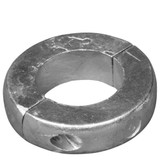
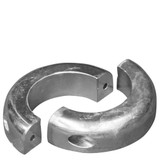
Many shaft anodes use a split design that clamps around the shaft. For the anode to work, it needs secure electrical contact with clean metal and direct exposure to the surrounding water.
- Clean the shaft's contact area and remove deposits or coatings that would interrupt electrical contact.
- Follow the manufacturer's assembly instructions, including any tightening sequence, torque or threadlocker requirements.
- Maintain the clearance specified for your shaft bearing and surrounding equipment; do not obstruct bearing water flow.
- Leave the working anode surface unpainted and free from antifouling.
- Check that the assembled anode is secure and cannot foul nearby components.
Read our guide to fitting shaft anodes for further information. If the correct position or protection arrangement is unclear, seek advice before fitting.
When Should Shaft Anodes Be Replaced?
Inspect shaft anodes regularly and at each lift-out. A common manufacturer guideline is to replace an anode when approximately 50% of its material has been consumed, or sooner if it becomes loose, damaged or unable to maintain reliable contact. Follow any more specific instructions for your anode and vessel.
There is no single replacement interval that suits every boat. Water conditions, time afloat, the connected metalwork and electrical conditions all influence anode consumption. Keep a record of wear so you can plan inspections and replacements around your own installation.
Shaft Anode FAQs
Can I use zinc or aluminium shaft anodes in fresh water?
Do not assume either is suitable. Zinc and conventional marine aluminium anodes can develop surface deposits in fresh water that reduce their activity. Magnesium is generally recommended for suitable freshwater installations, but the vessel and anode manufacturer's guidance should determine your choice.
Is a 25mm shaft anode the same as a 1-inch shaft anode?
No. A 1-inch shaft measures 25.4mm in diameter. A 25mm shaft anode and a 25.4mm shaft anode are intended for different shaft sizes. Choose the exact specified fit.
Can a shaft anode be fitted without removing the propeller shaft?
A split shaft anode can usually be assembled around the exposed shaft without removing it. Access, available clearance and the individual anode design still determine whether it can be fitted correctly.
Does a shaft anode replace the anode on my propeller?
Not automatically. Some propellers have dedicated anodes specified by their manufacturer. A shaft anode should not be assumed to replace these, or to protect electrically isolated parts. Follow the protection requirements for your particular propeller and stern gear.
Why is my shaft anode wearing away quickly?
Rapid consumption can result from an unsuitable alloy, insufficient anode capacity or electrical problems, including stray current. If wear increases sharply, have the cause investigated by a competent marine technician or electrician before relying on another replacement.
Why does my shaft anode still look new?
An unchanged appearance does not prove that an anode is working. Poor electrical contact, an unsuitable alloy or an insulating surface layer may prevent it from operating effectively. Check its condition and connections, especially if nearby metalwork shows corrosion.
Find Your Replacement Shaft Anode at Anode Outlet
Browse our shaft anodes by metal and design, then compare the individual product dimensions with your boat's installation. If you need help narrowing down a replacement, have your shaft diameter, water type and existing anode part number ready. Call 01634 568011 or email info@anodeoutlet.co.uk for help choosing from the range.