
Metal Guide

Al
Suitable for salt & fresh water
Mg
Suitable for fresh water
Zn
Suitable for salt water

Follow our colour coding for easy identification of metals.

Saildrive AnodesSaildrive Anodes

Saildrive anodes for reliable corrosion protection

Saildrive anodes help protect the submerged drive leg from galvanic corrosion. These replaceable sacrificial anodes gradually wear away as they work, making the correct specification and regular inspection an essential part of saildrive maintenance.

At Anode Outlet, you can browse replacement saildrive anodes by drive brand, metal and ring type, including options for Volvo Penta, Yanmar, Bukh, Lombardini and ZF installations, plus modified anodes for compatible Ambassador rope stripper systems. Choose your replacement using the exact saildrive model, the required part number and the water your boat operates in.

What does a saildrive anode do?

A saildrive anode is a sacrificial metal component fitted to help protect the drive's underwater metalwork. Galvanic corrosion can occur when different metals are electrically connected in water. The anode is designed to corrode preferentially, helping to protect the components it is connected to. This process is known as cathodic protection.

The anode must have the correct electrical contact with the drive and remain exposed to the water. Its protection also depends on using a suitable anode alloy and maintaining the saildrive's protective coating. A new anode cannot compensate for every coating defect or electrical fault.

How to choose the correct saildrive anode

Start with the saildrive identification plate and the manufacturer's parts information. The engine brand alone is not enough to identify the right anode, particularly if the boat's propulsion equipment has changed.

  1. Identify the exact drive: check the saildrive manufacturer, model and any serial number restrictions listed for the replacement.
  2. Check the part reference: compare the original equipment part number with the replacement product's stated compatibility.
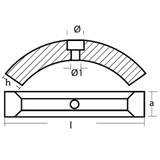
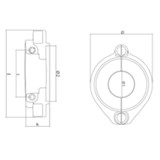
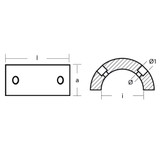
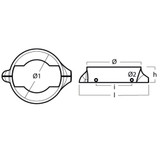
  3. Confirm the physical fit: check the ring diameter, profile, thickness, mounting holes and any required adaptor plates.
  4. Select the appropriate metal: use the drive manufacturer's guidance for salt, brackish or fresh water.
  5. Check the complete installation: account for the propeller, rope cutter, fixing hardware and any separate anodes they require.

Measurements and photographs are useful supporting information, but a similar-looking ring is not proof of compatibility. Check whether a product is a complete replacement set, an individual section or an anode supplied without fixings.

Shop saildrive anodes by brand

Use the categories below to narrow your search, then check the model and part references on each product page. Anodes within the same brand category are not necessarily interchangeable.

Zinc, aluminium or magnesium: which saildrive anode do you need?

The best saildrive anode metal depends on both the water conditions and the drive manufacturer's specification. Use this table as a starting point, then confirm the approved material for your particular installation.

General saildrive anode metal selection guide
Anode metal Typical application
Aluminium saildrive anodes Salt and brackish water, where specified for the drive. Brackish water is a mixture of fresh and salt water, commonly found in estuaries.
Magnesium saildrive anodes Fresh water, where approved by the drive manufacturer. Do not use magnesium anodes in salt or brackish water.
Zinc saildrive anodes Salt water applications for which zinc is specified. Zinc should not be treated as a universal choice for every saildrive or water type.

Volvo Penta recommends aluminium anodes for many salt and brackish water applications, with zinc retained for some older drives. This is why an old anode's material should not be your only reference when ordering a replacement.

If you move between coastal waters, estuaries and inland waterways, check the requirements before changing locations. An anode suitable for one environment may not provide appropriate protection in another.

Solid ring and split ring saildrive anodes

Solid ring saildrive anodes

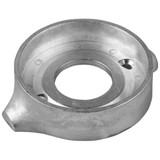
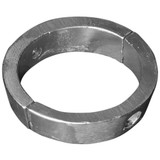
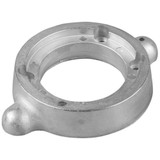
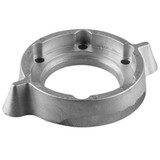
Solid ring saildrive anodes have a continuous, one-piece ring construction. Depending on the drive and propeller arrangement, fitting a replacement may require removal of the propeller or other components. Check the installation procedure as well as the dimensions before ordering.

Split ring saildrive anodes

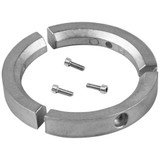
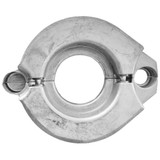
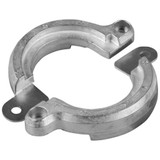
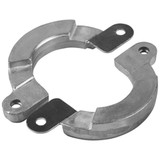
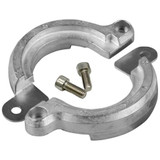
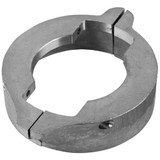
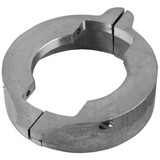
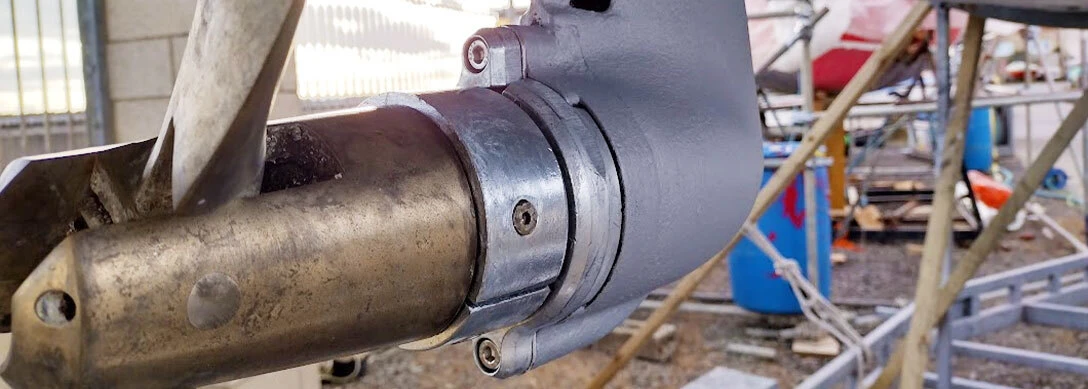
Split ring saildrive anodes use separate sections that assemble around the mounting position. On compatible installations, this can allow replacement without removing the propeller. Access and compatibility remain model dependent: a split ring is not automatically a substitute for a solid ring.

Rope cutters and propellers: check more than the drive ring

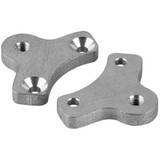
An Ambassador rope stripper installation may require an anode modified to accommodate the cutter's retaining pin and clearances. Match the anode to both the saildrive and the rope stripper arrangement. A standard anode intended for the same drive may not have the necessary modifications.

The saildrive leg and propeller can also require separate corrosion protection. Some folding and feathering propellers have their own hub anodes, and an insulating component can prevent a propeller from being protected by the drive anode. Check the propeller manufacturer's requirements whenever inspecting or replacing the saildrive ring.

When should saildrive anodes be replaced?

Follow the inspection schedule and replacement limit in your saildrive manual. Around 50% consumption is a common replacement threshold, but a manufacturer's time or operating-hour limit may require earlier replacement. Do not wait for the anode to disappear or become loose.

Inspect the anodes whenever the boat is lifted, as well as at the intervals specified for your installation. Look for substantial material loss, cracking, insecure fixings and deposits that may prevent the anode from working. Record the fitting date and compare its condition over time so you can recognise changes in consumption.

Fitting and maintaining a saildrive anode

Fit the correct replacement using the manufacturer's instructions, specified fixings and tightening torque. Check whether the procedure requires new screws, locking components or a particular thread treatment. Electrical continuity – a conducting connection between the anode and the protected component – is essential.

  • Keep the working surface unpainted: never coat the anode with antifouling, primer or paint.
  • Prepare the contact surfaces correctly: remove deposits as directed without damaging the drive or its surrounding protective coating.
  • Use approved coatings on the drive: check that any primer and antifouling are suitable for the saildrive's aluminium housing.
  • Check the finished installation: confirm secure mounting, correct clearance and electrical contact before relaunching.

Do not add bonding wires or supplementary anodes without checking the drive manufacturer's requirements. Any designed electrical isolation must be preserved.

Saildrive anode FAQs

Can an aluminium anode protect an aluminium saildrive?

Yes, where the drive manufacturer specifies it. Aluminium sacrificial anodes use a purpose-made alloy with different electrochemical properties from the drive housing. The word “aluminium” alone does not make two components equivalent: use a correctly specified marine anode.

Does a hull anode replace the need for a saildrive anode?

Do not assume a hull anode protects the saildrive. Protection depends on the electrical connections and the drive's isolation design. Retain the saildrive anodes specified for the installation unless the manufacturer has approved a different protection arrangement.

Why is my saildrive anode wearing away quickly?

Consumption can change with water conditions, propeller material, added metal accessories and electrical problems, including stray current or shore power related galvanic currents. A sudden increase needs investigation. Have a marine electrical or corrosion specialist check the cause rather than repeatedly replacing the anode without addressing it.

Why does my anode still look new?

An anode that shows little wear may be lightly loaded, but it could also have poor electrical contact, the wrong alloy or an inactive surface layer. Appearance alone cannot confirm protection. Check the installation and seek a corrosion assessment if the drive shows damage despite an apparently intact anode.

Are replacement saildrive anode bolts included?

This varies by product. Check whether the listing includes bolts, adaptor plates or other fittings, and whether you are buying a complete set or one component. Follow the installation instructions for any hardware that must be renewed.

Can I choose an anode using its weight?

Weight alone cannot identify the correct replacement. Anodes made from different metals can have different weights despite similar dimensions. Confirm the drive model, part number, alloy, mounting arrangement and product measurements before purchasing.

Find the right replacement saildrive anode

Browse by brand, metal or ring type above to narrow your options. If you need help identifying a replacement, have your saildrive model, existing part number, water type and details of any rope cutter or folding propeller ready when contacting Anode Outlet.

Why shop with Anode Outlet?

Since 2009 we've been helping boat owners worldwide keep their vessels protected with our leading range of anodes, not just for saildrives; but for engines, hulls, propellers and shafts too!

We stock a huge range of saildrive anodes from leading brands, including Bukh, Lombardini, Nanni, Volvo and Yanmar.

We pride ourselves on our customer service, and aim to make it as easy as possible for you to find the right anodes for your requirements; so if you have a mystery anode, contact us, and we will help you identify it! All our orders are shipped out on a fully tracked, next working day service - although if your order is urgent, please call us on 01634 568011 to confirm stock availability.