9th Oct 2026
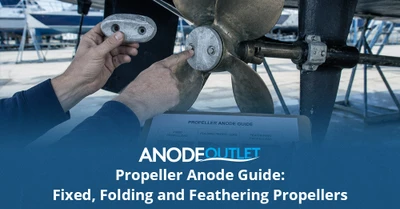
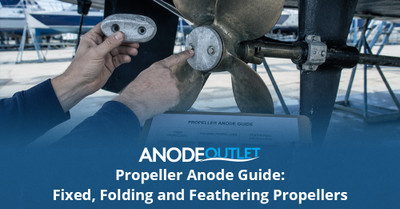
The correct propeller anode is determined by the propeller manufacturer, exact model or hub generation, blade count, shaft or saildrive installation, water type and fitted rope cutter. Fixed propellers may rely on a shaft anode, propeller-nut anode or bonded hull system. Folding and feathering propellers usually contain moving hubs and dissimilar metals and often use their own model-specific cone, ring, flat or button anodes.
Do not order by diameter or blade count alone. Two visually similar three-blade propellers can use different bolt patterns, internal recesses and sacrificial mass. An anode that physically fits but touches a blade, covers a grease port or lacks electrical contact can damage the propeller or leave it unprotected.
Browse the complete propeller anode range, then narrow by brand and model using the checks below.
Propeller removal is safety-critical
Prevent engine starting, secure the shaft, use the propeller manufacturer’s removal and refitting procedure, and renew locking devices where specified. A loose propeller or omitted locking element can cause loss of propulsion or loss of the propeller.
Contents
- Key facts at a glance
- How anode arrangements differ by propeller type
- Fixed propellers: shaft, nut and hull protection
- Folding propeller anodes
- Feathering propeller anodes
- How to identify a propeller anode
- Propeller anodes and rope cutters
- How to inspect a propeller anode
- What unusual propeller-anode wear means
- Which alloy should a propeller anode use?
- High-level replacement checklist
- Frequently asked questions
- Technical references
Key facts at a glance
- Propeller anodes protect through electrical contact; proximity to a hull anode is not enough.
- Folding and feathering props often have dedicated hub anodes separate from drive or shaft anodes.
- Brand, model, hub version and blade count can all change the replacement.
- Shaft and saildrive variants of the same propeller may use different anodes.
- Small propeller anodes can be consumed faster than large hull anodes and need earlier checks.
- Fasteners, threadlocker, torque and seating are model-specific.
- Keep grease, paint and thread compounds away from required electrical contact surfaces.
- A rope cutter may change available space or require a modified anode.
- Pinking, porosity or crumbling of bronze requires propeller assessment, not merely a fresh anode.
- Use the approved alloy for the water and propeller system.
Choose by propeller brand
Compare Bruntons, Darglow, Gori, Volvo Penta and other model-specific propeller anodes.
How anode arrangements differ by propeller type
| Propeller type | Common protection arrangement | Key identification detail |
|---|---|---|
| Fixed propeller on exposed shaft | Direct shaft anode, bonded hull anode, prop-nut/cone anode or combination designed for the boat | Shaft diameter, propeller/shaft material, coupling/bonding and available clearance. |
| Fixed saildrive propeller | Drive ring plus propeller-nut or hub anode where specified | Drive model and propeller model independently. |
| Folding propeller | Buttons, hub blocks, rings or cone anode around geared/folding hub | Manufacturer, model, blade count, hub generation and shaft/saildrive version. |
| Feathering propeller | Flat, conical or model-specific hub anode | Hub size, available aft clearance and serial/model family. |
| Controllable-pitch or specialist propeller | Manufacturer-designed internal/external anodes and bonding | Exact technical documentation and service support. |
Fixed propellers: shaft, nut and hull protection
A conventional bronze fixed propeller on a stainless shaft can be protected by a direct-fit shaft anode, by a hull anode bonded through the shaft system, or by an approved propeller-nut anode. Boat design determines the arrangement.
A direct shaft anode needs exact bore size, clean contact and correct clearance from the cutless bearing and propeller. A remote hull anode needs a sound conductive path across the gearbox, coupling or shaft brush. A flexible coupling can interrupt this path unless the design includes a bridge or electro-eliminator.
Prop-nut anodes are compact and can waste quickly. Check that the cone or cap does not interfere with a rudder, rope cutter or stern gear and that its locking arrangement remains secure.
Folding propeller anodes
Folding propellers use geared or pivoting blades to reduce drag. Their hubs contain pins, gears and bearing surfaces, so the manufacturer controls where sacrificial material is positioned. Some use several button anodes; others use a ring or cone.
- Identify propeller brand, model and blade count.
- Confirm whether it is a shaft or saildrive version.
- Record hub generation or serial number where available.
- Count every button or segment and replace the complete specified set.
- Inspect anode screws for damaged heads, corrosion and thread condition.
- Keep anode faces clear of grease used on gears and blade pivots.
- Check that blades open, fold and clear the new anodes after reassembly.
Browse dedicated Gori propeller anodes and other brand sections rather than choosing a generic button by diameter.
Feathering propeller anodes
Feathering propellers rotate their blades to align with the water flow under sail and present the correct pitch in ahead or astern. Their hubs are mechanically complex, and anode shape can be constrained by blade roots, grease points and available stern clearance.
Darglow FeatherStream propellers, for example, use model-specific flat or conical anodes secured with defined fasteners and thread treatment. The correct part depends on the hub model. Browse Darglow propeller anodes and confirm whether the application needs zinc or aluminium.
Bruntons propeller systems similarly require model-specific products. Use the Bruntons propeller anode category with the propeller identification, not only the boat make.
How to identify a propeller anode
- Photograph the complete propeller installed. Include drive/shaft, rope cutter and clearances.
- Record the propeller brand and model. Look for hub markings, paperwork and serial numbers.
- Record blade count and hub type. Do not assume every two- or three-blade version shares parts.
- State shaft or saildrive installation. Record the exact saildrive model where relevant.
- Identify the old anode part number. Check invoices, packaging and the propeller service manual.
- Measure the undamaged features. Bolt pattern, centre bore, thickness, taper and recess matter.
- Confirm water and alloy. Match the propeller maker’s approved zinc, aluminium or other option.
- List rope cutters and spacers. They can alter the standard anode or require a special version.
Propeller anodes and rope cutters
Rope cutters can be mounted on a shaft or saildrive and may sit beside the propeller hub. The added stainless or other metal can increase galvanic demand, while the physical cutter body can reduce space for a standard ring or cone.
| Combination | What to verify |
|---|---|
| Shaft rope cutter + shaft anode | Clearance, electrical continuity and whether additional anode capacity is specified. |
| Saildrive cutter + drive ring | Purpose-made split or modified ring approved by the cutter maker. |
| Cutter integrated with propeller hub | Dedicated cutter or hub anode and exact fasteners. |
| New cutter fitted to existing propeller | Earlier-than-normal inspection for changed anode wear. |
Never machine a standard anode to clear a cutter unless the manufacturer supplies the exact modification specification. Removing material changes service life and may weaken fixing areas.
How to inspect a propeller anode
- Photograph the anode and all sides of the propeller before cleaning.
- Look for even cratering, cracks, loose screws and missing pieces.
- Check the remaining mass against a new part and the service interval.
- Inspect the propeller for pink areas, pitting, porosity, impact damage and blade play.
- Remove the anode and inspect the hidden contact face and hub recess.
- Check bolt holes and threads; repair only to the propeller manufacturer’s procedure.
- Inspect shaft/drive anodes and bonding as a separate system check.
- Replace with exact fasteners, thread treatment and torque.
- Confirm blade movement, grease access and full clearance before relaunch.
Darglow describes annual anode replacement and greasing as central maintenance for its propellers. Other manufacturers use their own intervals. A small anode that is likely to be exhausted before the next lift-out should be replaced even if it has not yet reached a generic percentage.
What unusual propeller-anode wear means
| Finding | Possible explanation | Action |
|---|---|---|
| Propeller anode gone, shaft/hull anodes normal | High local demand or small anode mass | Verify exact model, shorten interval and inspect propeller. |
| Anode untouched, bronze pinking | Poor contact, wrong alloy, passivation or isolated hub | Stop and assess before refitting. |
| Anode screws repeatedly loosen | Wrong screws, damaged threads, omitted locking method or vibration | Repair to manufacturer procedure. |
| One button gone, others intact | Uneven contact, missing screw or local shielding | Replace complete set and inspect each recess. |
| Wear accelerated after rope cutter | Added galvanic load or reduced anode mass | Use cutter-specific guidance and monitor early. |
| Propeller and anode both corrode quickly | Anode capacity overwhelmed or stray-current problem | Commission electrical/corrosion investigation. |
Which alloy should a propeller anode use?
Follow the propeller manufacturer and water type. Zinc remains common in saltwater propeller applications, while aluminium versions are increasingly available for salt and brackish water. Magnesium is generally reserved for approved fresh-water systems and can be too active in salt water.
Keep material consistent across electrically connected systems unless the equipment manufacturer expressly specifies otherwise. A magnesium anode can sacrifice itself to protect zinc or aluminium anodes as well as the propeller, creating misleading rapid loss.
For Volvo systems, browse Volvo Penta propeller anodes and confirm whether the part is for the propeller, saildrive or sterndrive assembly.
Find the exact propeller fit
Choose by manufacturer and model, then confirm water type, hub generation and accessory clearance.
High-level replacement checklist
- Isolate engine starting and secure the shaft or drive.
- Mark the order and orientation of cones, spacers, washers and locking devices.
- Use the specified puller or removal method; do not hammer precision hubs.
- Clean the anode recess and intended contact surfaces only.
- Dry-fit the replacement and check blade, cutter and rudder clearance.
- Use exact fasteners and manufacturer-approved locking compound away from conductive faces.
- Torque and lock the propeller assembly to the correct procedure.
- Grease only specified mechanisms and keep grease off anode contact surfaces.
- Rotate and operate the propeller mechanism by hand as instructed before launch.
- Record part numbers and schedule an early inspection after any configuration change.
Frequently asked questions
Does every propeller need its own anode?
Not every design uses an anode on the propeller itself, but every underwater metal system needs an appropriate protection strategy. Follow the propeller and boat manufacturer.
Can a shaft anode protect a folding propeller?
It may contribute when electrically connected, but proprietary folding props often require dedicated hub anodes. Do not omit them.
Why are propeller anodes so small?
Space and hydrodynamics constrain their size. Small mass means they can need frequent inspection and replacement.
Can I reuse propeller-anode screws?
Only if the manufacturer permits it and the screws and threads are perfect. Many service procedures specify new screws or locking devices.
What does pink bronze on a propeller mean?
It can indicate selective loss of zinc from the alloy, known as dezincification. The propeller needs expert assessment; a new anode does not restore damaged metal.
Can I make a generic anode fit by drilling it?
No. Drilling changes mass, contact and retention and can create imbalance or interference. Use the exact approved product.